00 / Case study
Out of the inbox.
Into the app.
Organizing BMW's internal IT convention was a year of phone calls, spreadsheets and Word documents passed back and forth. I built a Laravel application that made the process largely automatic, and exhibitors ran their own stands through it for three conventions.
-
60+
Exhibitors
per convention -
03
Conventions
run on it -
11
Deadlines
automated -
00
Emails to book
a stand
- Client
- Agentur von Thülen
- Role
- Sole developer
- Stack
- Laravel
01 / Starting point
Planning a convention is a year of decisions taken with people who do not work for you. Every exhibitor had a stand to furnish, staff to register, catering to order, files to send to the printer and a page to fill in the printed catalog. All of it was arranged by email.
The agency organizing it, Agentur von Thülen, was the bottleneck by construction. An exhibitor who wanted two more chairs, or a corrected job title on a badge, had to ask someone and then wait. Multiply that by every exhibitor and every detail, and most of the year went on relaying changes rather than planning the event. Deadlines existed, but they were not taken very seriously: any change could still be sent to the agency by email, and many arrived after the date had passed.
We started by going through the tasks that were being done by hand, then sat down with the agency to work out which of them an exhibitor could safely be trusted to do themselves.
02 / Constraints
- The printer does not wait
- The catalog went to print on a fixed date, which left no time to fix an entry that overran its page. So anything an exhibitor could type had to fit the page as they wrote it, not be found too long once the file was with the printer.
- Self-service, within limits
- Exhibitors needed to change their own details without being able to change anything that cost the organizer money or space. Where permission was genuinely required, asking for it had to happen in the same place as the rest of the work.
- Deadlines that chase people
- The agency had been the reminder system. The application had to take that over and tell exhibitors what was still outstanding, so that nobody had to keep the list in their head.
03 / What I built
-
B/01
Exhibitor accounts
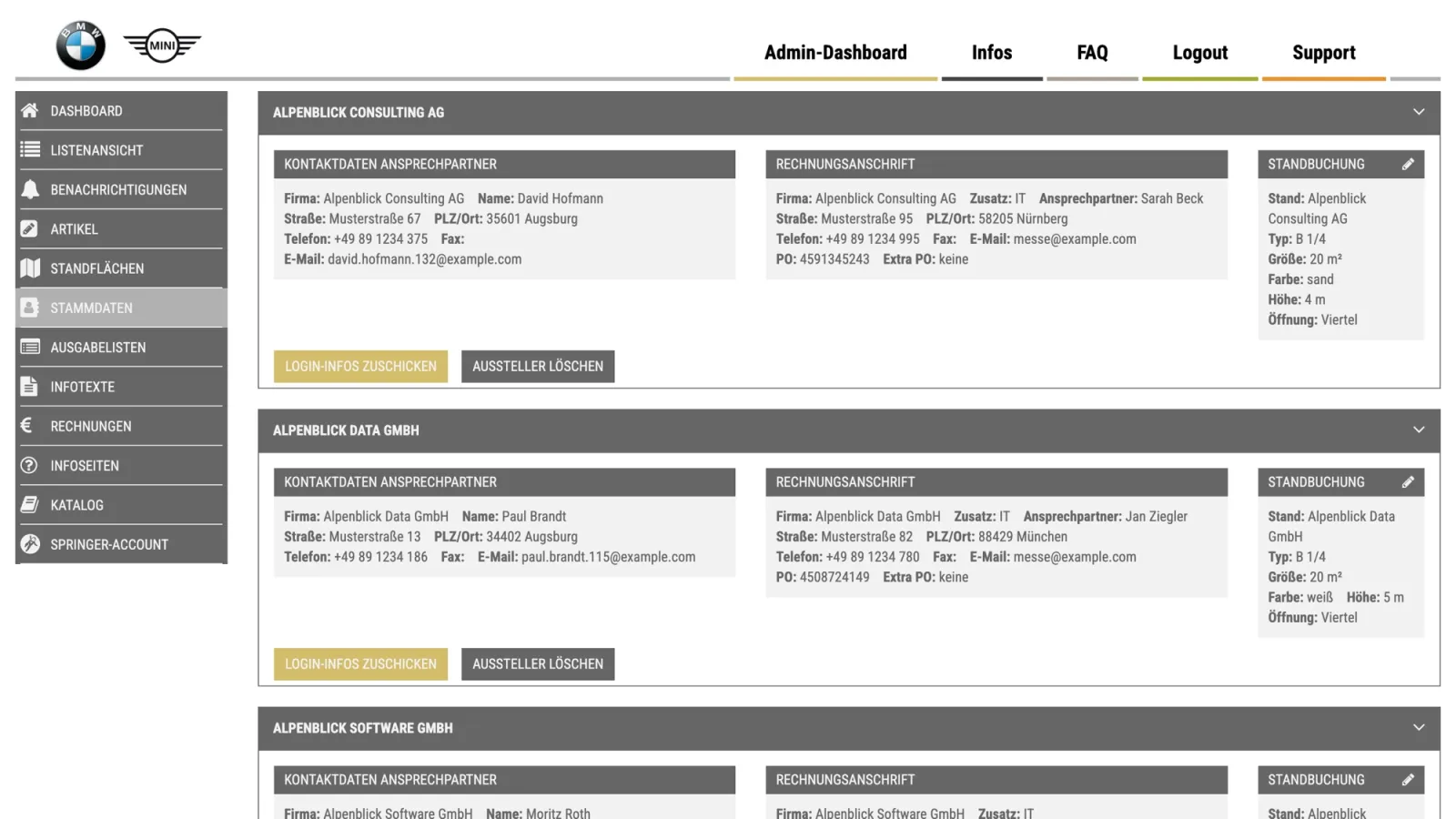
Each company signed up, picked its stand and worked through its own checklist. Staff badges, furniture and catering were entered once and stayed editable until the deadline closed them.
-
B/02
Booth configurator
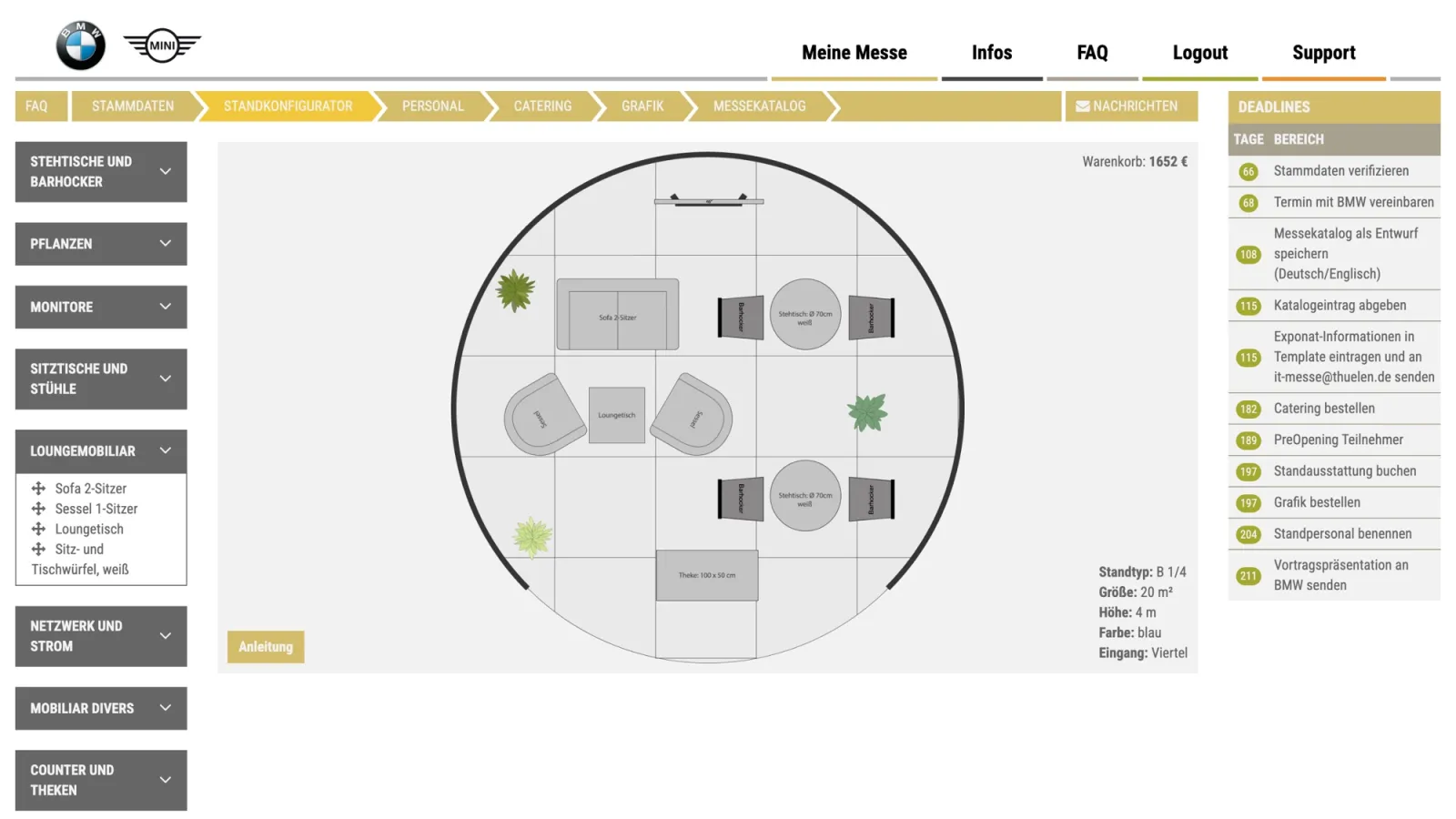
Furniture and decoration were dragged into a floor plan, so an exhibitor could see the stand before ordering it. The organizer exported the furniture lists for the whole convention in one click.
-
B/03
Catalog page editor
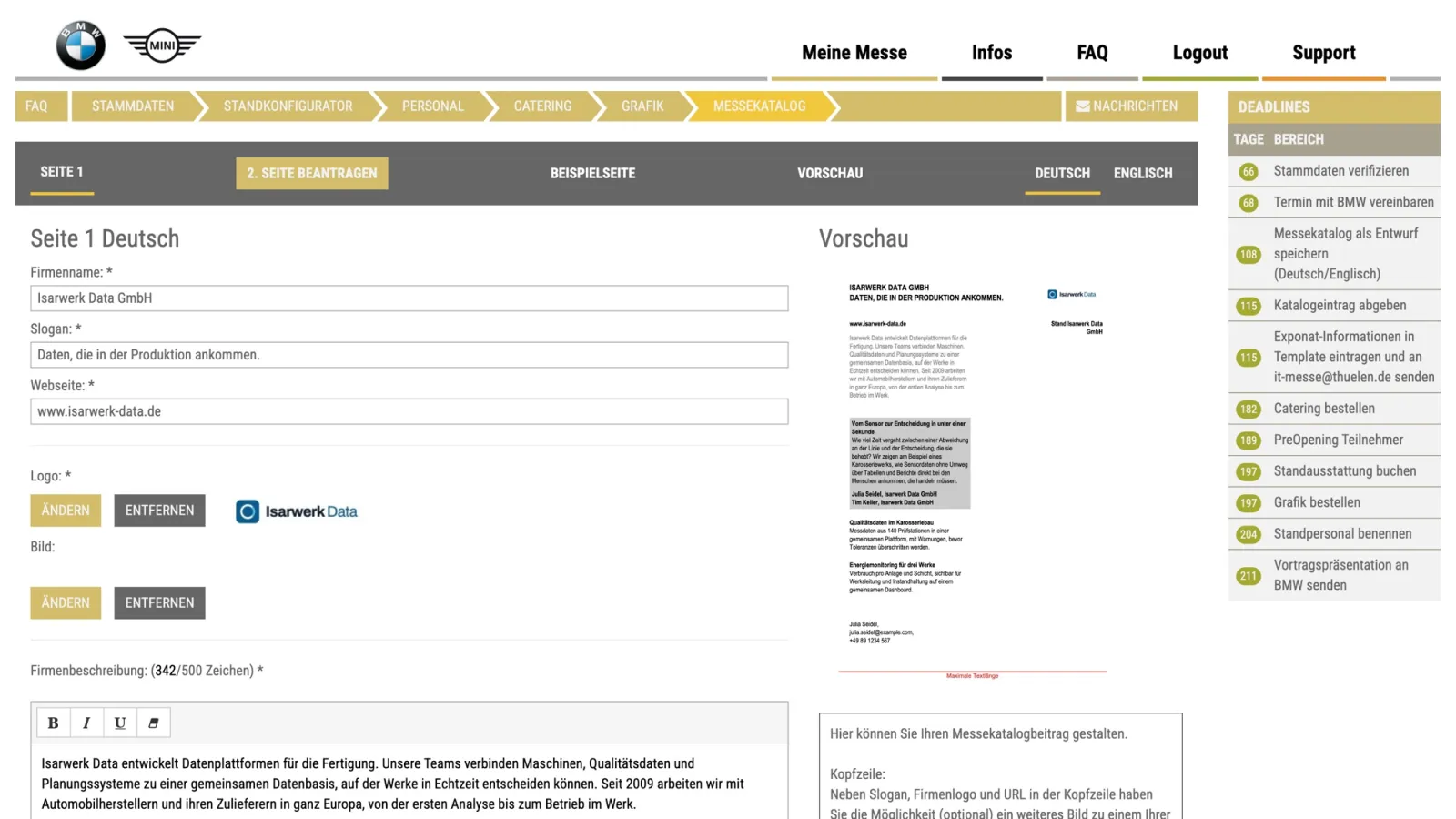
Exhibitors laid out their own catalog entry against a live preview of the printed page, and were warned the moment the content stopped fitting. It replaced several rounds of Word documents per exhibitor.
-
B/04
Deadlines and reminders
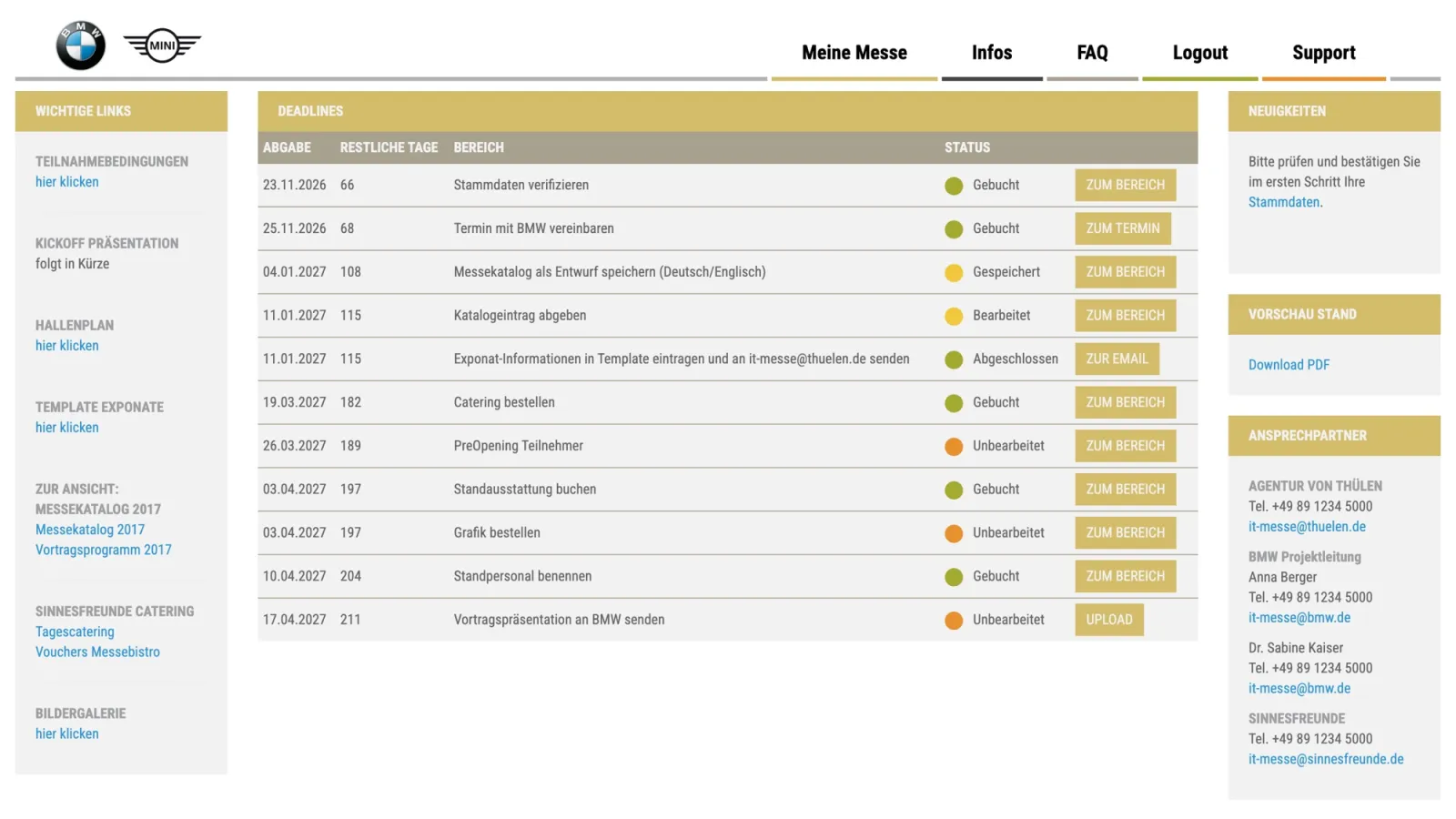
Every task carried a date and a countdown on the exhibitor's dashboard, with warnings as it came closer. Once a deadline passed, that part of the application locked. The administration panel showed at a glance who was late and on what.
-
B/05
Support tickets
Anything needing permission or a conversation was raised in the app rather than in the agency's inbox, so the request and the stand it concerned stayed attached to each other.
-
B/06
Invoicing
What an exhibitor ordered was what they were billed for, drawn from the same records rather than reassembled from correspondence after the convention closed.
04 / What changed
-
Booking a stand
- Before
- Email to the agency, then wait for someone to confirm it.
- After
- Chosen in the application, confirmed immediately.
-
Staff badges
- Before
- Names sent by email, and corrected by email.
- After
- Entered by the exhibitor, editable until the deadline.
-
A catalog entry
- Before
- Word documents sent back and forth, with overruns found at the printer.
- After
- Typed against a live preview that refused to overflow the page.
-
Chasing deadlines
- Before
- Deadlines on paper, and late changes sent by email anyway.
- After
- A countdown for every task, and a section that locked once its deadline passed.
-
The furniture order
- Before
- Collected from each exhibitor and added up by hand.
- After
- Exported from the configurator in one click.
05 / In their words
“The convention tool developed by Alexander helped us automate and optimize our procedures. Exhibitors were able to manage bookings, furnishing, employee badges, catering, and a lot more independently. Capturing and automating all these aspects in a single tool seemed impossible at first, but Alexander delivered! This allowed our team to focus on other areas and led to a lot of happy customers.”
Project Lead, Agentur von Thülen
06 / Credits
This application was built while I was running an agency, Webographen GmbH, later Designbase Studio. Design by Felix Brodbeck. Every screenshot on this page contains placeholder data.
07 / Next step
Have a process that runs on email?
Most internal tools start as a spreadsheet that outgrew itself. Walk me through what your year looks like now, and we can work out which parts are worth building and which are fine as they are.